
N-Fab Podium Steps vs Roan Running Boards: Which Heavy-Duty Step System Is Right for Your Truck?
Choosing between N-Fab’s Podium Steps and Roan Running Boards comes down to how you actually use your truck. Both systems deliver steel construction and serious weight capacity, but they’re designed for different priorities.
Podium Steps prioritize ground clearance and off-road protection with a narrow profile and raised mounting position. Roan Running Boards offer a wider stepping surface and lower step-in height for daily accessibility. We build both lines in-house, so this guide walks through the real differences in design, durability, and fit to help you pick the right system for your needs.

Ground Clearance and Off-Road Protection
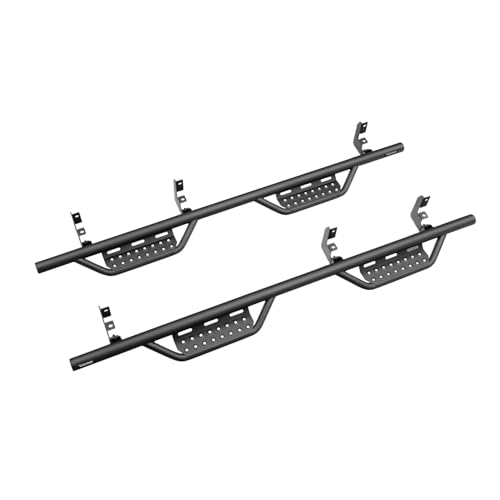
Podium Steps sit higher and tighter to the rocker panel than Roan boards, preserving approach angles on uneven terrain. The hoop-style design wraps the step bar in front of the cab mount, so rock strikes hit the steel hoop instead of your rocker or door.
Roan Running Boards mount lower to reduce step-in height, which trades some clearance for easier access. The flat-top design extends farther from the body, giving you a wider platform but also more exposure to trail debris.
If you frequently drive off pavement or need to maintain factory ground clearance for technical trails, Podium’s raised profile keeps obstacles away from painted sheet metal. Roan boards work better for paved commutes and job sites where a low, stable step matters more than clearance.
Step Width and Usability for Different Builds
Podium Steps measure three inches wide at the tread surface. That’s enough room for a boot but keeps the overall profile compact, so the step doesn’t extend past your door’s edge when opened.
Roan Running Boards span five to six inches depending on the model, offering a full platform you can step onto at any point along the board. The extra width helps with gear loading, toolbox access, and passengers who need a stable surface.
Choosing Based on Door Clearance
If you park in tight garages or between job-site equipment, Podium’s narrow bar clears obstacles that would catch a wider board. Roan’s extended platform makes sense when you need both hands free and want a step wide enough to hold your weight without precise foot placement.
Mounting Strength and Vehicle-Specific Fit
Both systems bolt directly to factory frame points using vehicle-specific brackets we design for each truck model. Podium mounts use a welded hoop that ties the front and rear attachment points together, distributing weight across the full length of the step instead of relying on individual bracket welds.
Roan boards use heavier-gauge mounting plates at each bracket location, securing the board to the frame with grade-eight hardware. The flat-board design spreads weight evenly, so there’s no single stress point when you step near the center of the span.
Installation and Adjustment
Podium brackets install with no drilling on most applications, using existing frame holes and body mounts. Roan boards require the same no-drill setup but include shims for height adjustment on lifted trucks, letting you level the board even after suspension modifications.
Finish Durability and Long-Term Corrosion Resistance
We coat both Podium and Roan systems with our Epyx finish, which bonds electrostatically to bare steel before the powder topcoat. The multi-layer process seals the metal against road salt, mud, and UV exposure without the chipping issues you see with single-coat powder alone. That same coating process appears across our entire product range, including commercial applications like the Growler Fleet Side Steps built for heavy use.
The difference in finish performance comes down to surface area and design. Podium’s tubular shape sheds water and debris naturally, so salt doesn’t pool in crevices. Roan’s flat-top surface collects more road spray, which means more frequent cleaning if you drive through winter slush or mud regularly.

Weight Capacity and Real-World Load Limits
Podium Steps carry a 300-pound static load per side, tested at the center of the span where leverage stress peaks. The hoop structure distributes that weight across the front and rear mounts, so there’s no single weld point under full load.
Roan Running Boards support up to 500 pounds per side due to the wider mounting footprint and heavier bracket hardware. The flat platform design lets you load weight anywhere along the board without worrying about balance or finding the step’s center.
For most daily use, either system handles typical stepping and occasional cargo loading. If you routinely carry toolboxes, coolers, or gear onto the bed from the side of the truck, Roan’s higher capacity and wider surface make that work safer and more stable.
Choosing the Right Step System for How You Use Your Truck
Podium Steps make sense if you drive off-road regularly, park in tight spaces, or want to preserve factory ground clearance while adding a functional step. The narrow profile and raised mount keep the step out of the way without sacrificing usability.
Roan Running Boards fit better if you prioritize easy access, need a wide platform for loading gear, or rarely encounter trail obstacles that would catch a lower step. The added step width and higher weight capacity make daily tasks easier at the cost of a slightly lower clearance.
Both systems deliver the same steel construction and corrosion-resistant finish we use across our entire product line, so the choice comes down to fit and function for your specific needs. If you’re still weighing options, our Roan Running Boards page includes detailed measurements and vehicle-specific fitment data to confirm compatibility with your truck.
Common Questions About Podium vs Roan Step Systems
Yes, Podium Steps fit lifted trucks up to six inches without modification. The fixed bracket height works with most suspension lifts, though trucks with body lifts may need spacer shims to align the step parallel to the rocker panel.
For lifts over six inches, custom brackets or adjustable mounts may be required depending on your specific truck model and suspension setup.
Roan boards clear most factory mud flaps, but aftermarket flaps that extend lower than stock may contact the rear bracket. Check your flap’s lower edge measurement before ordering, or plan to trim the flap or relocate the bracket slightly rearward.
We provide vehicle-specific fitment notes in each product listing that flag known clearance issues with common aftermarket accessories.
Both systems use the same multi-layer Epyx coating, so corrosion resistance is identical. The difference is maintenance. Podium’s tubular design sheds salt and slush naturally, while Roan’s flat surface collects more road spray and requires more frequent rinsing to prevent buildup.
If you can’t wash your truck weekly during winter, Podium’s self-cleaning shape reduces the need for manual cleaning to maintain the finish.
No, the mounting brackets and installation hardware differ between the two systems. Mixing them would create uneven step-in heights and mismatched frame attachment points, which would affect both safety and appearance.
If you need different features on each side of the truck, both systems are sold in complete pairs, so switching between models later is straightforward.
Podium Steps weigh approximately 40 pounds per pair for a standard crew cab. Roan Running Boards weigh around 65 pounds per pair due to the wider platform and heavier brackets.
The weight difference is minimal compared to typical truck cargo, and neither system produces measurable fuel economy changes in normal driving. Aerodynamic drag from the wider Roan profile may slightly increase wind noise at highway speeds but doesn’t affect mileage noticeably.
Both Podium and Roan systems carry a limited lifetime warranty covering defects in materials and workmanship. The warranty does not cover damage from collisions, improper installation, or modifications made after purchase.
Finish wear from normal use, including scratches and chips from road debris, is expected over time and is not covered. The Epyx coating resists corrosion under those surface marks, so cosmetic wear doesn’t affect structural integrity.