
N-Fab Podium Steps vs Nerf Step RS: Which Heavy-Duty Step System Offers Better Off-Road Protection?
Choosing between our Podium Steps and Nerf Step RS systems comes down to how you actually use your truck off-road. Both deliver heavy-duty step access and rocker panel protection, but their construction philosophies differ in ways that matter once you’re navigating rock trails or deep ruts.
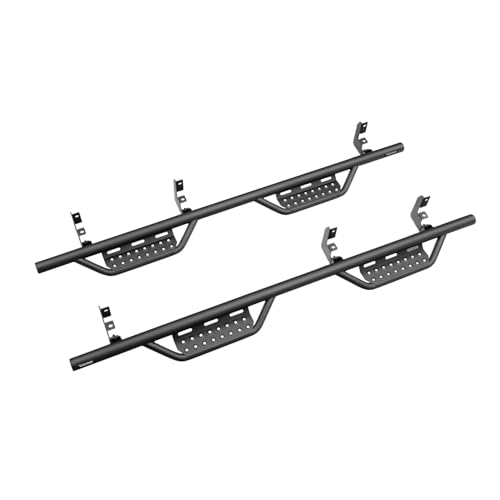
The Podium system prioritizes maximum ground clearance with a hoop-style design that tucks tight to the frame, while the Nerf Step RS trades a small amount of clearance for broader step surface area and integrated rock slider protection that extends further outboard. This N-Fab steps comparison walks through the engineering trade-offs so you can match the right system to your terrain and daily driving habits.

Construction and Material Differences That Affect Durability
Both systems start with 1.75-inch diameter carbon steel tubing, TIG-welded at every joint and finished with our textured black powder coat that resists chipping better than gloss finishes when rocks strike the surface. The Nerf Step RS adds a full-length rocker slider plate underneath the step tube, effectively turning the system into dual-purpose protection—you get a step and a rock deflector in one assembly.
The Podium design omits that slider plate, which saves roughly 15 pounds per side and keeps the overall profile narrower for tighter trail clearances. Steel thickness and weld quality are identical across both lines, so the durability difference comes down to coverage area rather than material grade. The ISO 1461 galvanizing standard governs corrosion resistance in automotive applications, though both our systems rely on powder coat rather than hot-dip galvanizing due to the specific joint geometry involved in these assemblies.
Ground Clearance and Step Height Trade-Offs
Podium Steps mount 2 inches higher on the frame rail than the Nerf Step RS, which translates to roughly 1.5 inches of additional ground clearance once installed. That difference becomes noticeable on off-camber climbs where one rocker might drag while the opposite wheel lifts—the Podium’s tighter tuck can mean the difference between clearing an obstacle and catching it.
The trade-off shows up at entry and exit. The Nerf Step RS’s lower mounting height puts the step surface closer to the ground, cutting the vertical reach needed to climb into a lifted truck by nearly 2 inches. For daily use or for passengers who aren’t as tall, that easier step-in can outweigh the clearance advantage, especially if most of your driving happens on graded forest roads rather than technical rock sections.
Weight Capacity and Load Distribution Across the Step Surface
Both systems are rated to support 300 pounds per step, tested with static load applied at the center of the step tube. The Nerf Step RS distributes that load across a wider footprint thanks to the rocker slider plate beneath the tube—when weight compresses downward, the slider acts as a brace that prevents the step from flexing as much under heavy or dynamic loads.
The Podium’s hoop design achieves the same load rating through shorter unsupported spans between mounting brackets rather than through an underlying plate. We space Podium brackets every 18 inches along the frame rail, compared to 24-inch spacing on the Nerf Step RS, which shifts more of the structural work to the mounting hardware itself. Neither approach is weaker; they simply route stress through different parts of the assembly.
Rock Slider Protection and Rocker Panel Coverage
The Nerf Step RS integrates a full-length slider that extends 3 inches outboard from the rocker panel, creating a sacrificial contact surface for rocks and trail debris. When you slide sideways across a boulder, the slider plate takes the impact instead of your truck’s sheet metal—essentially the same function our dedicated Trail Slider system provides, but combined with step access in one component.
Podium Steps don’t include a slider plate, so the step tube itself becomes the first point of contact during a side scrape. The tube is strong enough to deflect most rock strikes without bending, but shallow dents and finish wear accumulate faster than they would on a flat slider plate. If rocker panel protection ranks as your top priority and you want a system that also handles bed rack integration, Get Back Rack offers complementary mounting solutions that pair with either N-Fab step system without requiring custom brackets.
Installation Complexity and Vehicle-Specific Fitment
Podium installations require drilling into the frame rail on most applications—typically four holes per side—because the hoop design doesn’t align with factory mounting points. The Nerf Step RS takes advantage of existing frame holes on roughly 60% of the truck models we support, which cuts installation time nearly in half and eliminates the need to enlarge or relocate holes.
Both systems include all necessary hardware and detailed instructions with torque specs, but the Podium’s tighter frame clearances mean you’ll need a low-profile socket set to reach the upper mounting bolts on crew cab models. Budget an extra 30-45 minutes for a Podium install compared to the Nerf Step RS if you’re working in a driveway without a lift.
Matching Step System Design to Your Off-Road Priorities
The Nerf Step RS makes the most sense if rocker panel protection ranks as a top concern and you frequently encounter side-slope trails where rocks scrape along the truck’s lower body. Its integrated slider plate and easier step-in height also suit daily drivers who want off-road capability without sacrificing convenience.
The Podium system delivers maximum ground clearance and lighter weight, which matters on technical climbs and in situations where every inch of underbody space counts. If you already run dedicated sliders or rarely encounter obstacles that strike the rocker area, the Podium’s simpler design and faster drainage give you the step access you need without adding components you won’t use. Both systems share the same steel construction and finish quality—the right choice comes down to which engineering trade-offs align with how you actually drive.
Common Questions About Podium vs Nerf Step RS Systems
Yes, but you’ll need to install a separate slider system rather than retrofitting a plate onto the Podium steps themselves. Our RKR and Trail Slider lines mount independently to the frame rail and can coexist with Podium Steps, though the combined weight and slightly reduced clearance mean you’re essentially building what the Nerf Step RS already delivers in one assembly.
If you’re already considering sliders, starting with the Nerf Step RS typically makes more sense from both a cost and installation standpoint.
The Nerf Step RS’s rocker slider plate absorbs and distributes impact force across a larger area, which prevents concentrated dents and keeps the step tube itself cleaner over time. The Podium’s step tube is equally strong in terms of material, but without a backing plate, each rock strike leaves a more visible mark on the tube itself.
Neither system will fail structurally from typical trail use, but the Nerf Step RS shows less cosmetic wear after a season of hard off-roading.
A full Podium Steps kit weighs approximately 65 pounds for a crew cab installation, while the Nerf Step RS comes in around 95 pounds due to the added slider plates. The 30-pound difference translates to roughly 0.1 MPG in real-world driving, which is measurable but rarely noticeable unless you’re tracking every tank closely.
The bigger fuel impact comes from aerodynamic drag if you mount additional accessories like light bars or cargo baskets on the steps themselves.
Podium Steps require relocating or trimming most factory mudflaps because the hoop extends slightly further rearward than stock rocker trim. The Nerf Step RS maintains clearance for factory mudflaps on most applications, though a few models with unusually deep flaps may still need minor trimming.
Neither system includes provisions for OEM running board lighting, but both accept aftermarket LED strips that mount to the underside of the step tube with adhesive clips.
No, neither the Podium nor the Nerf Step RS is engineered to serve as a jacking point. While the step tubes and mounting brackets can support 300 pounds of static vertical load, a jack applies concentrated force at a single point rather than distributing weight across the step surface, which can bend the tube or shear mounting bolts.
Always use your truck’s factory jacking points or a dedicated off-road jack base even if the step system appears sturdy enough to handle the load.
The Podium’s open hoop design allows mud and debris to fall through and drain naturally, which means less buildup in crevices and fewer spots where standing water can collect. The Nerf Step RS’s rocker slider creates a shelf where mud can pack in above the slider plate, requiring occasional hosing or pressure washing to prevent long-term buildup.
Neither system traps water in a way that accelerates rust, but the Podium self-cleans more effectively during normal driving.